

About Electrical and Electronic Engineering

Department of Electrical and Electronic Engineering
Chittagong Independent University has been offering B. Sc. in Electrical and Electronic Engineering (EEE) degree under School of Science and Engineering (SSE) since its inception. The SSE, previously named School of Engineering & Computer Science (SECS), traces its root back to 1993 when Independent University, Bangladesh (IUB) was founded and its outer campus in Chittagong was emerged. Later in 2013, CIU was established and the journey of SSE took off with new goals. Today B. Sc. in Electrical and Electronic Engineering degree continues to be one of the major programs of SSE aiming to produce world class Electrical and Electronic Engineering graduates.
Vision & Mission
Vision:
- To become a front-runner in bridging out globally competent electrical and electronic engineering graduates through research and innovation entrepreneurship development with quality engineering education.
- Delivering trained and skilled human resources enlightened with a logical bend of mind and thereby contribute value to the knowledge-based society and technology-based economy.
Mission:
- Produce skilled human resources through quality education and grooming them as professional leaders for 21st century to meet the demands of sustainable development of the country.
- Provide state-of-the-art resources that contribute to achieve excellence in teaching-learning, research and developmental activities.
- Bridge the gap between industry and academia by framing curricula and syllabi based on industry and social needs.
Message from the Head
As a head of the Department of Electrical and Electronic Engineering (EEE), I welcome all of you on behalf of the faculty members, students, and office bearers. The EEE department of Chittagong Independent University started its Journey in the (2005-2006) session under the umbrella of IUB Chittagong Campus. Now it has become one of the core engineering disciplines in the field of power engineering, electronics, telecommunication, and renewable energy technologies.
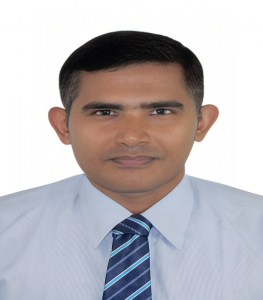
Currently, the department offers a Bachelor of Science in Electrical and Electronic Engineering, a 160-credit undergraduate program developed based on outcome-based education (OBE) according to the guidelines provided by the University Grants Commission of Bangladesh (UGC).
Chittagong Independent University EEE department has an excellent record in classroom teaching,laboratory work, seminar and workshop organizing, and research. The department has a good number of potential faculty members who graduated from top engineering universities at home and abroad. The faculty members also have very good research profiles in power systems, power electronics, electronics and chip design, telecommunications, microwave engineering, optoelectronic, biomedical engineering etc. The department is also hiring adjunct faculty from top universities at home and abroad to teach students and develop expertise in the particular courses offered by the departments. The department also believes in the collaboration between industry and academia so that industry experts and personnel are invited to a shot-time lecture series, seminars, and workshops to improve the quality of the students.
I firmly believe that the EEE department of CIU will help the nation to develop potential graduates and expert human resources in the field of EEE. I look forward to welcoming all prospective candidates to the EEE department of Chittagong Independent University. For further queries, please feel free to contact me personally through email and telephone numbers provided below.
Best wishes,
Dr. Rubell Sen Goopta
Head of Electrical and Electronic Engineering
School of Science & Engineering
Credit Distribution & Course Categories
Requirements for the Bachelor of Science in Electrical and Electronic Engineering
| Sl. No | Category of Courses | Distribution of Credits |
| 1 | Language and General Education Courses | 24 |
| 2 | Basic Science and Mathematics Courses | 22.5 |
| 3 | Other Engineering Courses | 9 |
| 4 | Program Core Courses | 88 |
| 5 | Technical Elective Courses | 16.5 |
| Total Credits for B.Sc. in EEE | 160 | |
Duration of the program: 4 years;
Admission Requirements
Second Year Core Computing Courses
| Sl. No. | Course ID | Course Title | Prerequisite | Credit |
| 1 | ENG 0231101 | Functional English | N/A | 3 |
| 2 | EEE 0713111 | Electrical Circuits I | N/A | 3 |
| 3 | EEE 0713111L | Electrical Circuits I Lab | N/A | 1.5 |
| 4 | PHY 0533111 | Engineering Physics | N/A | 3 |
| 5 | PHY 0533111L | Engineering Physics Lab | N/A | 1.5 |
| 6 | MAT 0541111 | Calculus | N/A | 3 |
| 7 | CSE 0613111 | Structured Programming | N/A | 3 |
| 8 | CSE 0613111L | Structured Programming Lab | N/A | 1.5 |
| 9 | CSE 06131121 | Object-Oriented Programming | CSE 0613111 | 3 |
| 10 | CSE 0613121L | Object-Oriented Programming Lab | CSE 0613111 | 1.5 |
| 11 | CME 0731113 | Engineering Drawing | N/A | 1.5 |
| 12 | MAT 0541121 | Differential Equations and Matrices | N/A | 3 |
| 13 | CHE 0531122 | Engineering Chemistry | N/A | 3 |
| 14 | SOC 0314102 | Introduction to Sociology | N/A | 3 |
| 15 | EEE 0713121 | Electrical Circuits II | EEE 0713111 | 3 |
| 16 | EEE 0713121L | Electrical Circuits II Lab | EEE 0713111 | 1.5 |
| Total | 39 | |||
First Year Foundation Courses
| Sl. No. | Course ID | Course Title | Prerequisite | Credit |
| 1 | BLL 0232201 | Bangla Bhasha | N/A | 3 |
| 2 | ECN 0311201 | Introduction to Economics | N/A | 3 |
| 3 | MAT 0542211 | Engineering Statistics | MAT 0541121 | 3 |
| 4 | EEE 0713211 | Electrical Machines I | EEE 0713121 | 3 |
| 5 | EEE 0713211L | Electrical Machines I Lab | EEE 0713121 | 1.5 |
| 6 | EEE 0714213 | Electronics I | EEE 0713121 | 3 |
| 7 | EEE 0714213L | Electronics I Lab | EEE 0713121 | 1.5 |
| 8 | BDS 0222201 | History of Emergence of Independent Bangladesh | N/A | 3 |
| 9 | ACN 0411201 | Principles of Accounting | N/A | 3 |
| 10 | MAT 0541221 | Vector Analysis and Complex Variables | MAT 0541111 | 3 |
| 11 | ME 0715222 | Fundamentals of Mechanical Engineering | N/A | 3 |
| 12 | EEE 0713221 | Electrical Machines II | EEE 0713211 | 3 |
| 13 | EEE 0713221L | Electrical Machines II Lab | EEE 0713211 | 1.5 |
| 14 | EEE 0714224 | Electronics II | EEE 0714213 | 3 |
| 15 | EEE 0714224L | Electronics II Lab | EEE 0714213 | 1.5 |
| 16 | MAT 0541222 | Numerical Methods | MAT 0542211 | 3 |
| Total | 42 | |||
Third Year Advanced Computing
| Sl. No. | Course ID | Course Title | Prerequisite | Credit |
| 1 | MGT 0413301 | Industrial and Operational Management | N/A | 3 |
| 2 | EEE 0714311 | Signals and Systems | EEE 0713121 | 3 |
| 3 | EEE 0714313 | Principles of Electromagnetics | EEE 0713121 | 3 |
| 4 | EEE 0714317 | Digital Electronics | EEE 0714213 | 3 |
| 5 | EEE 0714317L | Digital Electronics Lab | EEE 0714213 | 1.5 |
| 6 | EEE 0713315 | Transmission and Distribution of Electrical Power | EEE 0713221 | 3 |
| 7 | EEE 0713312 | Electrical and Electronic Service Design | EEE 0714224 | 1.5 |
| 8 | EEE 0714318 | Measurement and Instrumentation | EEE 0714224 | 3 |
| 9 | EEE 0714318L | Measurement and Instrumentation Lab | EEE 0714224 | 1.5 |
| 10 | EEE 0714327 | Analog Communication | EEE 0714224 | 3 |
| 11 | EEE 0714327L | Analog Communication Lab | EEE 0714224 | 1.5 |
| 12 | EEE 0713322 | Power System Analysis | EEE 0713315 | 3 |
| 13 | EEE 0713322L | Power System Analysis Lab | EEE 0713315 | 1.5 |
| 14 | EEE 0714323 | Linear Control Systems | EEE 0714311 | 3 |
| 15 | EEE 0714323L | Linear Control Systems Lab | EEE 0714311 | 1.5 |
| 16 | CSE 0714321 | Microprocessor and Interfacing | EEE 0714317 | 3 |
| 17 | CSE 0714321L | Microprocessor and Interfacing Lab | EEE 0714317 | 1.5 |
| 18 | EEE 0714324 | Microwave Engineering | EEE 0714313 | 3 |
| Total | 43.5 | |||
Fourth Year Specialization & Capstone
| Sl. No. | Course ID | Course Title | Prerequisite | Credit |
| 1 | EEE 0713498 / EEE 0713499 | Senior Project/Internship | Senior Standard | 1.5 |
| 2 | LFE 0788411 | Live-in-Field Experience | N/A | 3 |
| 3 | EEE 0714415 | Power Electronics | EEE 0714224 | 3 |
| 4 | EEE 0714415L | Power Electronics Lab | EEE 0714224 | 1.5 |
| 5 | EEE 0713413 | Power System Protection | EEE 0713315 | 3 |
| 7 | EEE*** | Elective I | Senior Standard | 3/4.5 |
| 8 | EEE*** | Elective II | Senior Standard | 4.5/3 |
| 9 | EEE 0713498 / EEE 0713499 | Senior Project/Internship | Senior Standard | 2.5 |
| 10 | EEE 0714423 | Digital Communication | EEE 0714327 | 3 |
| 11 | EEE 0714423L | Digital Communication Lab | EEE 0714327 | 1.5 |
| 12 | EEE 0714425 | Digital Signal Processing | EEE 0714311 | 3 |
| 13 | EEE 0714425L | Digital Signal Processing Lab | EEE 0714311 | 1.5 |
| 6 | EEE***/CSE*** | Elective III, Elective IV, or Elective V | Senior Standard | 4.5 |
| Total | 35.5 | |||
Technical Elective Streams
| Type | Course ID | Course Title | Prerequisite | Remarks | Credit |
| Power System | EEE 0713431 | Power Plant Engineering | Senior Standard | Elective I | 3/4.5 |
| EEE 0713432 | Renewable Energy Conversion | ||||
| EEE 0713432L | Renewable Energy Conversion Lab | ||||
| EEE 0713433 | Electrical Engineering Materials | ||||
| EEE 0713434 | Electrical Drive Systems | ||||
| EEE 0713435 | Energy and Environment | ||||
| EEE 0713436 | Power System Optimization | ||||
| EEE 0713438 | Special Topics in EEE | ||||
| Electronics and Chip Design | EEE 0714441 | Semiconductor Physics and Devices | Senior Standard | Elective II | 3/4.5 |
| EEE 0714442 | VLSI Technology | ||||
| EEE 0714442L | VLSI Technology Lab | ||||
| EEE 0714444 | Optoelectronics and Photonics | ||||
| EEE 0714445 | Nanoelectronics | ||||
| Communication and Signal Processing | EEE 0714452 | Wireless Communication | Senior Standard | Elective III | 3/4.5 |
| EEE 0714452L | Wireless Communication Lab | ||||
| EEE 0714453 | Fiber Optics Communication | ||||
| EEE 0714453L | Fiber Optics Communication Lab | ||||
| EEE 0714455 | Data Communication and Networking | ||||
| EEE 0714455L | Data Communication and Networking Lab | ||||
| EEE 0714456 | Cellular Mobile and Satellite Communication | ||||
| EEE 0714456L | Cellular Mobile and Satellite Communication Lab | ||||
| Computer Engineering | CSE 0613121 | Object-Oriented Programming | Senior Standard | Elective IV | 3/4.5 |
| CSE 0613121L | Object-Oriented Programming Lab | ||||
| CSE 0714411 | Artificial Intelligence and Machine Learning | ||||
| CSE 0714411L | Artificial Intelligence and Machine Learning Lab | ||||
| CSE 0714412 | Robotics | ||||
| CSE 0714412L | Robotics Lab | ||||
| CSE 0714415 | Multimedia Communication | ||||
| CSE 0714415L | Multimedia Communication Lab | ||||
| CSE 0613416 | Mobile Application Development | ||||
| CSE 0613416L | Mobile Application Development Lab | ||||
| CSE 0611417 | Image Processing | ||||
| CSE 0611417L | Image Processing Lab | ||||
| CSE 0611418 | Internet of Things | ||||
| Biomedical Engineering | EEE 0714461 | Biomedical Instrumentation | Senior Standard | Elective V | 3/4.5 |
| EEE 0714461L | Biomedical Instrumentation Lab |
Contact
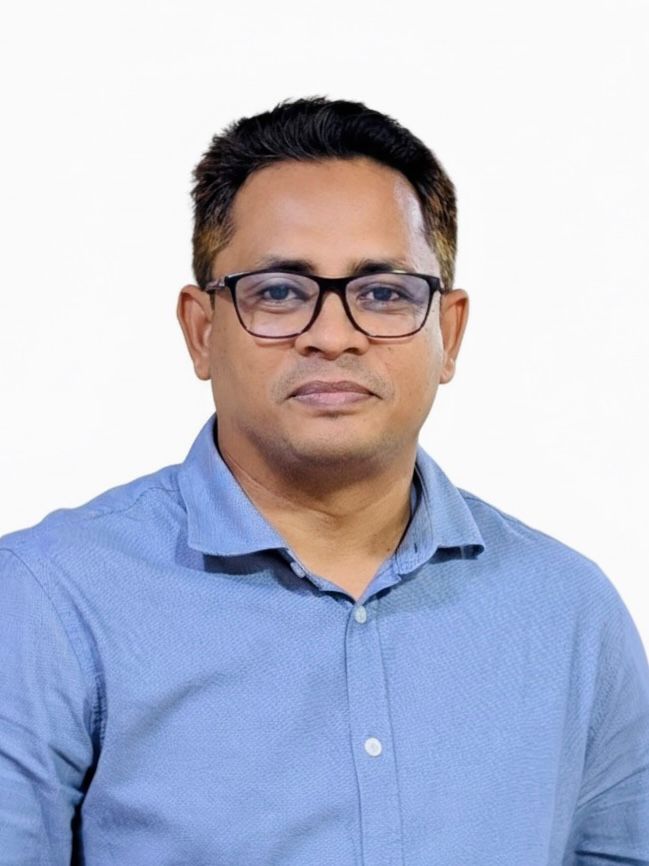
Md.Rashedur Rahman
Manager, School of Science & Engineering
02333352926, 02333351262, Ext: 116
Roksana Manjil,Building No. 2, Chittagong Independent Univeristy
Email: rashed@ciu.edu.bd