About Department of Supply Chain Management
Department of Supply Chain Management
Vision & Mission
Vision:
Mission:
| M1 | To produce graduates of high standard equipped with sufficient knowledge in Supply Chain Management. |
|---|---|
| M2 | To advance the knowledge of supply chain management through relevant and contextual research. |
| M3 | To integrate Sustainable Development Goals (SDGs) in all aspects of teaching, learning, and research with regard to the Supply Chain Management. |
| M4 | To foster the culture of innovation and entrepreneurship in line with The Fourth Industrial Revolution (IR 4.0). |
| M5 | To engage with community, alumni, industry, and all other stakeholders. |
Message of HoD
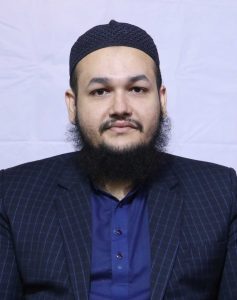
Assalamu Alaikum, and welcome to the Department of Supply Chain Management at CIU Business School!
The department didn’t just start from scratch. This had a history – a few years back the CIU Business School pulled off a USAID-funded certification project named “Integrated Supply Chain Management” in collaboration with industry experts across the port, logistics, freight forwarding, and manufacturing establishment. The monumental experience – achieved from the project — shaped everything here. Given the dormant potential of the blue economy and rise in global trade, the port city Chattogram will require graduates with sound academic knowledge in Supply Chain Management in near future.
Very few business schools in Bangladesh offer a dedicated BBA in Supply Chain Management, which has always felt strange given that we’re home to Chattogram Port — one of Asia’s vital gateways. As global trade routes shift and geopolitical realities reshape world business, this city’s strategic importance will only grow in the coming decades. We want our graduates at the center of that shift, not watching from the sidelines.
Our approach is simple: a curriculum grounded in real industry practice, faculty who stay connected to the field and a learning environment where professionalism and integrity are non-negotiable. We’re launching with a BBA major and minor in Supply Chain Management, and working toward an MBA major so working professionals can return to sharpen their edge.
Look at the volume of trade passing through this city every day, and ask who’s going to manage it in the next twenty years. We’d like that answer to include our graduates. We look forward to having you with us.
Sincerely,
Program Education Objectives (PEOs)
| PEO1 | Understanding core concepts and principles of Supply Chain Management: The students are expected to be able to exhibit an appropriate blend of knowledge in the field of Supply Chain Management. |
|---|---|
| PEO2 | Problem solving, critical thinking, and ethical reasoning: The students are expected to develop critical thinking skills as well as develop the understanding of the ethical reasoning including the ability to describe, analyze, and link the context with concepts and theories, evaluate the situation, solve problems, and make and defend decisions. |
| PEO3 | Effective communication skills: The students are expected to develop effective reading, listening, writing, and speaking skills in the context of professional business communications. |
| PEO4 | Team building, and networking: The students are expected to be able to interact professionally and productively in small teams in a variety of social and business settings and demonstrate effective leadership and collaboration skills for making decisions and accomplishing the goals. |
| PEO5 | Entrepreneurial competencies: The students are expected to be able to start their own business ventures by having both theoretical knowledge and practical experience of a certain period. |
Program Learning Outcomes (PLOs)
| PLO1 | The students will be able to develop in-depth theoretical and practical knowledge of Supply Chain Management in light of sustainable development and industrial revolutions. |
|---|---|
| PLO2 | The students will be able to develop capacity to prepare and implement business plans through utilizing latest technology along with creativity, integrity, and entrepreneurial skills. |
| PLO3 | The students will be able to develop the ability to understand, predict, and manage the operational & environmental issues of business through strong leadership and professionalism. |
| PLO4 | The students will be able to develop effective communication skills to present ideas, problems, and solutions to all the stakeholders. |
| PLO5 | The students will be able to develop adaptability to work in a diverse, dynamic, and challenging environment through self-improvement, teamwork, and innovation. |
Program Overview & Curriculum
- Accounting
- Finance
- General Management
- Management Information System (MIS)
- International Business
- Marketing
- Human Resources Management
Program Overview & Curriculum
Credit Distribution:
| Sl. No | Category of Courses | Distribution of Credits |
| 1 | General Education/Foundation Courses | 36 Credits |
| 2 | Core Courses | 57 Credits |
| 3 | Major Courses | 23 Credits |
| 4 | Minor Courses | 15 Credits |
| 5 | LFE (Live-in-Field Experience) | 3 Credits |
| 6 | Internship/Research Project | 6 Credits |
| Total requirement for the degree | 140 credits |
Graduate Attributes:
- Knowledgeable in contemporary issues of the business and management;
- Creative, innovative, and conscientious;
- Having business intelligence, leadership, professionalism, and problem-solving skills;
- Having negotiation, communication, persuasiveness, critical thinking, and decision-making ability;
- Tendency to develop teamwork ability, intercultural competency, inquisitiveness, self-awareness, and a lifelong learning habit.
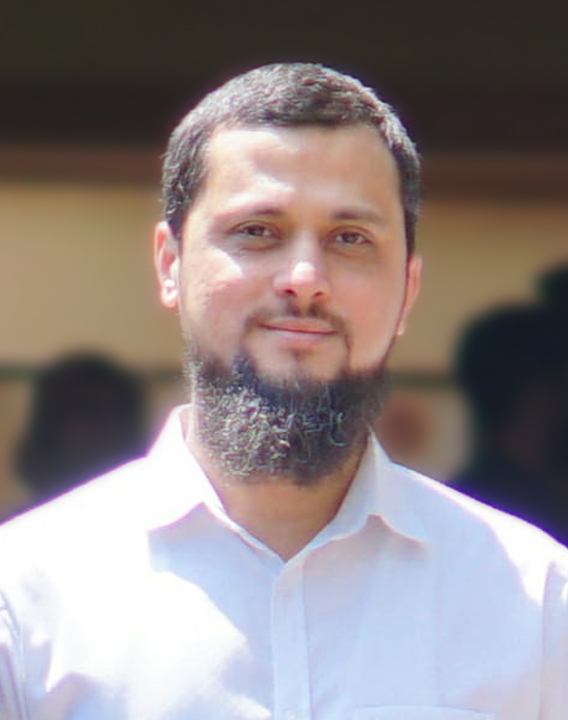
Mr. Mohammad Rasel Eusoofi
Assistant Director
02333352926, 02333351262; Ext.: 220
Room No.: 3407
Email: rasel@ciu.edu.bd